
Susan L. Hartman is licensed to practice law in California and Massachusetts

biking beer.jpgFelony drunk driving charges for a motorcycle rider who allegedly crashed into a bicycle just after midnight on March 20th, according to 10news.com. The accident happened at the 2000 block of 31st Street in San Diego; however, the motorcycle driver was arrested at his home after leaving his passenger at the scene.

The bicycle rider suffered a broken pelvis and was taken to an area hospital. It is alleged that the bicyclist was also drinking prior to the accident and rode his bike into the path of the motorcycle.

In California, it is a misdemeanor to bicycle or cycle under the influence, CUI. Vehicle Code Section 21200.5 states, “It is unlawful for any person to ride a bicycle upon a highway while under the influence of an alcoholic beverage or any drug, or under the combined influence of an alcoholic beverage and any drug. Any person arrested for a violation of this section may request to have a chemical test made of the person’s blood, breath, or urine for the purpose of determining the alcoholic or drug content of that person’s blood pursuant to Section 23612, and, if so requested, the arresting officer shall have the test performed.”

In order for this code section to apply, the bike must be non-motorized. If it is powered by a motor it will be deemed a vehicle, and the standard DUI vehicle code sections would apply.

The .08% blood alcohol content (BAC) presumption of a standard DUI is not required with CUI. This means that someone can be charged with this offense with a minimal amount of alcohol in their system. Typically, DUI defense lawyers fight low BAC charges because the prosecutor often has a hard time proving the case, thus resulting in a dismissal.

The maximum penalty for a drunk biking charge is a $250 fine. This is much less severe than a standard DUI.
Continue reading ›

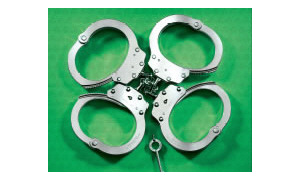
irish handcuffs.jpgSan Diego law enforcement was out looking for drunk drivers during the St. Paddy’s holiday and for all the personnel and money expended for the roadblocks, the DUI arrests were very low.


In Poway, a DUI checkpoint was set up at the 14400 block of Pomerado Road on March 18th, from 7 p.m. until 2:30 a.m. 669 drivers passed through and only 3 driving under the influence arrests were made.

Chula Vista also conducted a DUI checkpoint on the 2300 block of Main Street, from 7 p.m. until 12:30 a.m., on the same day. 1,047 vehicles passed through this one, and only 4 were arrested on suspicion of drunk driving.

San Diego, Oceanside, and San Marcos announced they would have a DUI roadblock; however, they have yet to release their statistics.

Online Sources:

DUI Checkpoints Net 7 Drunken Driving Arrests: 10news.com
News Releases: San Diego Sheriff’s Department

Continue reading ›

A DUI checkpoint will be conducted in San Diego at an undisclosed location within the city limits on Thursday, March 17th, between 9:00 p.m. and 3:00 a.m, according to the San Diego Police Department.

San Marcos will also conduct a drunk driving checkpoint at an undisclosed location on St. Paddy’s Day, from 7:00 p.m. until 2:00 a.m., according to the San Diego Sheriff’s Department.green beer.jpg

Poway Sheriff’s Station will setup a drunk driving checkpoint on Friday, March 18th, between 7:00 p.m. and 2:30 a.m. In addition, Oceanside police will conduct a DUI Checkpoint on that same day but from 8:00 p.m. until 3:00 a.m. The exact address of these drunk driving checkpoints has not been released.

Everyone wants to indulge in green beer or a few shots of Irish whiskey on St. Patrick’s Day. However, to avoid being arrested for driving under the influence at the end of your party, plan ahead: Designate a sober driver; use public transportation or a taxi; or plan to spend the night at the party location.

Continue reading ›

DUI and gross vehicular manslaughter while intoxicated convictions resulted in a six year prison sentence for San Diego resident, Anthony Guarino, on March 11th, according to cbs8.com. He was convicted of these drunk driving charges in January 2011, after his lawyers unsuccessfully argued that the accident that killed Marc Durham was actually caused by a “microsleep” episode due to his severe sleep apnea, not drunk driving.

Gross vehicular manslaughter while intoxicated is punishable by imprisonment in state prison for four, six, or ten years, under California Penal Code (PC) 191.5(a). If the defendant has a prior PC 191.5 conviction, or two or more prior DUI convictions, the sentencing range is fifteen years-to-life in prison. The sentence imposed depends on the specific facts of the case.

The maximum sentence for all the charges in this drunk driving case was 13 years in state prison. However, the judge considered the fact that Guarino had no prior criminal record, served 20 years in the Marine Corps, was a good family man, and had good standing in the community in giving the defendant the middle term of six years instead of the maximum penalty allowed under the law.

Continue reading ›

IID.jpgIgnition interlock devices, or IID’s, were found to prevent repeat DUI offenders, according to the Centers for Disease Control and Prevention. “Re-arrest rates for alcohol-impaired driving decreased by a median of 67 percent relative to drivers with suspended licenses.”

IID’s are devices that can be installed in vehicles to prevent someone from operating a vehicle with a blood alcohol concentration (BAC) above a specified level. The driver blows into the machine, a breath sample is taken, and if the BAC is above the stated level, the car will not operate.

Currently, California courts may require a person convicted of a first DUI to install an ignition interlock device on any vehicle the person owns or operates, pursuant to Vehicle Code Section 23575. This penalty is more likely if the driver’s blood alcohol concentration was .15 percent or higher, if the offender had two or more prior moving violations, or if a chemical test was refused.

California is also conducting a pilot program under Vehicle Code Section 23700, which became effective July 1, 2010, in the Counties of Alameda, Los Angeles, Sacramento, and Tulare only. Upon conviction of any drunk driving offense in those counties, the offender is required by the Department of Motor Vehicles, DMV, to have a certified ignition interlock device installed.

With this recent CDC study showing the effectiveness of the IID programs, you can expect the California pilot program will be expanded in the future to all California counties with the hopes of preventing repeat DUI’s.

Online Sources:

CDC Says Ignition Interlocks Work In Reducing Drunk Driving: stlamerican.com
Ignition Interlocks Reduce Alcohol-Impaired Driving: cdc.gov

Continue reading ›

The San Diego chapter of MADD, Mothers Against Drunk Driving, gave awards to eight San Diego Sheriff’s Deputies today for their efforts in arresting drunk drivers.

The patrol area and the deputies are as follows:

  1. Encinitas: Deputy Brenda Weibe;
  2. Encinitas: Deputy Dave Toner;
  3. Imperial Beach: Deputy Rob Siegfried;
  4. Lemon Grove: Deputy Felix Santiesteban;
  5. Poway: Deputy Aaron Meleen;
  6. San Marcos: Deputy Tammy Bennetts;
  7. Santee: Deputy Laura Shands; and,
  8. Vista: Deputy Kenneth Werner.

These officers were responsible for over 700 drunk driving arrests in 2010. Deputy Toner made 187 of those DUI arrests and he will also receive the MADD California Hero Award at another MADD event in Sacramento on March 26th.

These awards were given just two weeks after it was announced that Officer Alicia Chudy of the Chula Vista Police Department would be receiving the MADD California Hero Award for her 85 DUI arrests last year.

Online Source:
Mothers Against Drunk Driving Honors Deputies:10news.com
Chula Vista Police Officer Receives MADD Award: signonsandiego.com

Continue reading ›

La Mesa Police conducted a sting operation at the El Cajon Courthouse looking for those driving with a suspended license due to drunk driving, according to lamesa.patch.com.

Once convicted of driving under the influence, the court usually places the person on probation, their license is suspended, and they are ordered to attend a meeting that is hosted by MADD, Mothers Against Drunk Driving. The three hour sting was at the courthouse where MADD panel meetings take place.

13 drivers out of 171 that were contacted were alleged to be driving on a suspended or revoked license. They were issued a citation, their cars impounded, and a hold was placed on the vehicles.

Under Vehicle Code Section 14601.2, if you are convicted of driving with a suspended or revoked license due to a DUI, the penalty for a first offense is a mandatory minimum of 10 days in jail and a fine of $300 – $1000. The penalty for a second offense within five years is a mandatory minimum of 30 days in jail and a fine of $500 – $2000.

These stings are conducted approximated four times a year. They are funded by a grant from the California Office of Traffic Safety through the National Highway Traffic Safety Administration.

Continue reading ›

hypocrite.mug.jpgFormer MADD President, Debra Oberlin, 48, was arrested and charged with driving under the influence in Gainesville, Florida, on February 18th, according to cbsnews.com.

She was driving erratically, swerving and crossing lanes, when she was pulled over at 1:10 a.m. Supposedly, Oberlin smelled of alcohol, had bloodshot eyes, and admitted to drinking four beers.

She took two breath tests which allegedly showed her blood alcohol content to be .234 and .239. This is almost 3 times Florida’s legal limit of .08.

Oberlin was the MADD chapter president in Gainesville for three years in the 1990’s. MADD stands for Mothers Against Drunk Driving and their mission statement, according to their website, is “to stop drunk driving, support the victims of this violent crime and prevent underage drinking.” She earned this mug!!

No one is immune from drunk driving charges, not even a MADD Chapter President!! If you drink alcohol and you drive a car, you are at risk to be stopped, investigated, and charged with drunk driving.

Continue reading ›

cabrera.bobblehead.jpgDUI is suspected after Miguel Cabrera, first baseman for the Detroit Tigers, was stopped in St. Lucie, Florida on his way to training camp on February 16th, 2011.

When approached by the cops, he picked up a bottle of Scotch whiskey and started drinking it. It is further alleged that he had an odor of an alcoholic beverage on his breath, bloodshot eyes, and slurred speech, according to UPI.com. He was charged with drunk driving and resisting arrest and is scheduled to be arraigned on March 16th.

Alcohol abuse has been a problem for Cabrera in the past. In 2010, he entered an alcohol treatment facility after an domestic incident that led to his arrest and a chemical test that showed he was three times the legal limit of .08% blood alcohol content. After this recent DUI arrest, Major League Baseball’s doctors and specialists recommended he enter another treatment program.

Cabrera has not explicitly admitted to having an alcohol problem; however, he has had two alcohol related incidents that involved law enforcement within the past sixteen months. If he has a California driver’s license, the DMV could refuse to issue or renew his license if it is found that he is “incapable of safely operating a motor vehicle because of alcoholism, excessive and chronic use of alcoholic beverages, or addiction to, or habitual use of, any drug.” (California Vehicle Code Section 12806(a).)

Continue reading ›

not guilty.jpgYou are pulled over by a police officer suspected of driving under the influence. You take a breath or blood test. The result — .12 (or even higher). You are over the legal limit of .08% blood alcohol content (BAC) and you are arrested and charged with Vehicle Code Section 23152, driving under the influence of alcohol.

You ask yourself, “Should I just plead guilty? Do I need to hire an attorney?” You should never plead guilty at the arraignment stage. And yes, you need to hire a skilled, exclusively DUI defense attorney.

It is never recommended that a person plead guilty at the arraignment. At this early stage, the discovery documents are not available to the defendant or the defendant’s attorney. DUI defenses become apparent during the discovery phase of the case.

Even though the chemical test results showed you were over the legal limit, you may still have defenses in your case. Before you can even consider your breath or blood test results, you have to evaluate the prosecution’s entire case against you.

A skilled trial attorney will review all the discovery documents, evaluate the prosecutor’s case, and advise you on any defenses. Appropriate motions may be filed, which can result in your matter being dismissed or reduced.

Since a DUI conviction will be on your driving record for 10 years, it will be used as a prior to enhance the penalty of any other drunk driving cases you may pick up during that time period. Therefore, it is important to aggressively fight to get the case reduced or dismissed.

Continue reading ›

Contact Information